


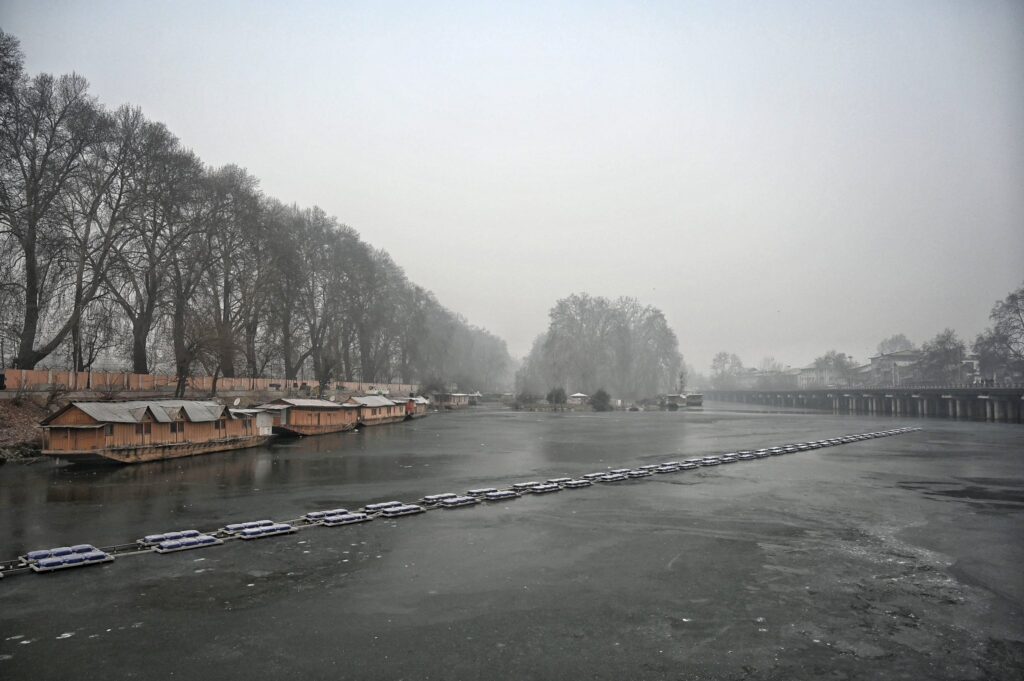
Srinagar, the summer capital of Jammu and Kashmir, experienced its coldest night this winter with temperatures plunging to -2.1°C, as reported by the Meteorological (MeT) Department. The winter chill enveloped the region during the early hours, marking a stark shift in weather patterns.
According to MeT data, the coldest location in the Kashmir Valley was Pahalgam, where the mercury dipped to an even lower mark of -3.8°C. This sharp drop in temperatures signifies the onset of harsher winter conditions across the valley.
Director of the MeT, Dr. Mukhtar Ahmad, provided insights on the current weather situation, stating, “There is no forecast of any wet spell for the next week. Night temperatures will likely remain unchanged until November 17.” After this date, a slight improvement in night temperatures may occur for two to three days.
As temperatures fell below the freezing point, residents of Srinagar and surrounding areas witnessed frost formation on pavements, gardens, and vehicles during the early morning hours. This visual phenomenon not only illustrates the severity of the winter chill but also indicates that residents need to prepare for harsher conditions ahead.
The winter season in the Kashmir Valley typically begins around this time and leads to a range of challenges, including transportation delays, health issues, and infrastructure strains. Locals have begun to adapt by using traditional heating methods, including kangris (fire pots) to stay warm.
This significant drop in temperature coincides with the onset of winter tourism. The region expects an influx of tourists eager to experience the scenic snow-covered landscapes. Those visiting should prepare adequately for the cold weather to ensure a comfortable stay.
As the mercury continues to plummet, officials urge residents to take precautions against health threats associated with severe cold, such as hypothermia and respiratory ailments. Community health services are on alert, ready to assist those in need during this frigid weather period.
The latest data indicates that this winter’s temperatures may be among the coldest recorded in recent years. As the days grow shorter and colder, it will be crucial for authorities to monitor weather patterns and provide timely updates to the public to minimize potential disruptions.

