


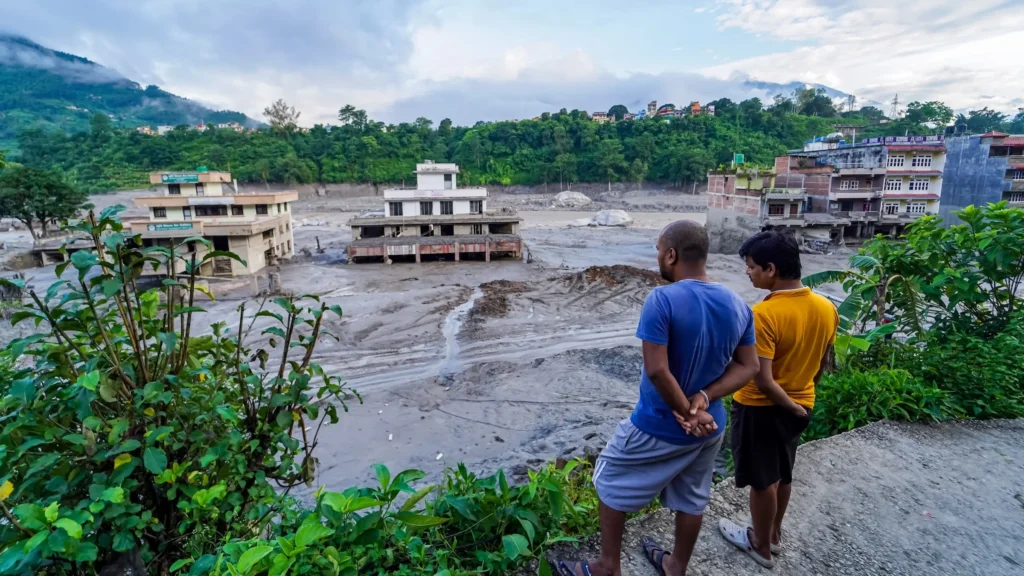
The devastating flash floods in Nepal have led to a tragic death toll of 1,344 as of Saturday, with officials confirming that nearly 4,900 people remain missing. Nepal’s National Disaster Risk Reduction and Management Authority reported active recovery operations as the country grapples with the aftermath of this natural disaster.
The floods originated from an ice-rock avalanche near the Nepal-Tibet border on August 26, unleashing a catastrophic surge of water into the Bhotekoshi River. This sudden influx of water obliterated homes, swept away vehicles, and destroyed vital infrastructure including roads and bridges. Numerous hydropower projects suffered substantial damage, aggravating the situation in northern and central Nepal.
As rescue teams sift through the rubble, they have recovered 758 adult bodies and 85 children. According to officials, 501 of these bodies were found in conditions indicative of extended exposure to water and debris. The authorities have temporarily buried 1,030 bodies after carrying out necessary protocols, such as DNA collection.
Chitwan district has emerged as the most affected area, with around 360 bodies recovered. Other districts like Rasuwa, Nuwakot, Dhading, Gorkha, Tanahun, and Nawalparasi East and West have also reported recoveries. Alarming statistics reveal that more than 600 missing individuals are children from Rasuwa and Nuwakot districts.
Authorities continuously monitor critical river levels including Koshi, Narayani, and others that threaten to exacerbate flooding. Rescue operations have entered their eleventh day, drawing in joint rescue teams led by the Nepal Army, focusing primarily on hydropower sites where many workers remain unaccounted for.
In a breakthrough moment, two workers from the Trishuli 3A hydropower project, identified as Kabir Maharjan and Sanjay Sah, were successfully rescued from a tunnel, showcasing the ongoing efforts amid dire circumstances.
India and China have lent their expertise to support Nepali rescue teams. Rescuers from India collaborated with the Nepal Army to establish a temporary access route within the Chilime tunnel in Rasuwa district, facilitating the transport of heavier rescue equipment to critical areas.
This disaster has also impacted the Chinese side of the border, claiming at least 21 lives in Tibet, with over 500 individuals still missing, according to sources from Chinese media.
On Saturday, search operations continued as authorities worked to recover more bodies and vigilantly monitored rising river levels, emphasizing their commitment to rescuing individuals in some of the most affected regions.

