


Jammu, October 8, 2026:
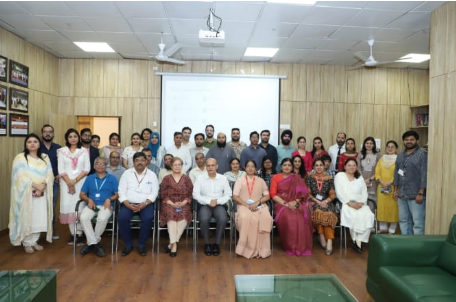
In a significant step towards improving cancer care, Government Medical College (GMC) Jammu, in collaboration with the Indian Council of Medical Research (ICMR), held a two-day Co-Development Workshop on October 7 and 8, 2026. This event focused on cancer prevention and screening strategies for breast, oral, cervical, and gastric cancers in Jammu & Kashmir and Ladakh. High-level health officials, medical professionals, and researchers gathered to formulate evidence-based techniques that can be effectively implemented in the community.
The urgent need for improved cancer healthcare in the region is clear, given the rising incidence of these diseases. The workshop aimed to create practical strategies that enhance early detection, accurate diagnosis, and treatment options across Jammu & Kashmir and Ladakh. Attendees engaged in discussions to identify gaps in the current healthcare delivery systems and find relevant local interventions.
Workshop Highlights and Key Discussions
A major segment of the workshop featured discussions led by Dr. Ashutosh Gupta, Principal GMC Jammu, and Dr. Jyotsna Suri, HOD of Pathology. They emphasized the need for implementation science in cancer care, focusing on the unique challenges faced by healthcare systems in these regions. Dr. Nisha Jose, a Senior Scientist from ICMR, underlined the collaborative effort to tailor health programmes based on local demands.
Another notable session revolved around data management techniques, presented by Dr. Pulkit Verma, a Programme Officer from ICMR. The use of the RED Cap Platform for data collection showcased the importance of accurate data in assessing healthcare efficacy and ensuring informed decision-making in future cancer programs.
Improving Breast Cancer Survival Rates
The development of a proposal aimed at enhancing breast cancer survival rates formed a crucial aspect of the workshop. Stakeholders collaborated to identify critical areas throughout the patient journey, from awareness to timely diagnosis and access to treatment, ensuring that women’s health receives the attention it deserves in Jammu & Kashmir.
Integrated Cancer Screening Strategies
The workshop also focused on integrated strategies to tackle the prevention and screening of major cancers. Participants discussed identifying high-risk demographics, bolstering screening services and establishing streamlined referral protocols to ensure patients receive necessary follow-ups and interventions.
Collaboration for Effective Health Solutions
The workshop’s setting at GMC Jammu facilitated essential interactions between national research experts and local health practitioners. The presence of ICMR’s specialists, along with administrative officials from the Union Territory, illustrated the importance of multidisciplinary collaboration for effective public health initiatives. This gathering provided insights that could lead to robust proposals to elevate cancer prevention and treatment mechanisms within the region.
Future Directions
The results of this workshop are expected to drive several key outcomes:
- Enhancing public awareness and prevention activities for cancer.
- Boosting screening capacity for predominant cancers across populations.
- Facilitating early detection and accurate diagnoses.
- Improving referral systems and healthcare continuity.
- Optimizing pathways for breast cancer treatment and patient survival.
- Designing localized intervention plans based on solid evidence.
- Implementing robust data management through digital platforms.
- Generating useful insights to guide future cancer control programs.
- Fostering collaboration between research entities, governmental departments, and medical institutions.
A Milestone for Cancer Care in the Region
This ICMR workshop signifies a pivotal moment in establishing a comprehensive cancer control strategy within Jammu & Kashmir and Ladakh. By uniting policymakers, medical experts, and healthcare managers, the initiative aims to improve tangible patient outcomes and elevate the quality of care given to communities. The overarching goal remains: to ensure early cancer detection, provide swift access to treatment, and bolster the support network throughout the cancer care continuum. This collaboration may ultimately create a healthier future for individuals affected by cancer in the region.

