


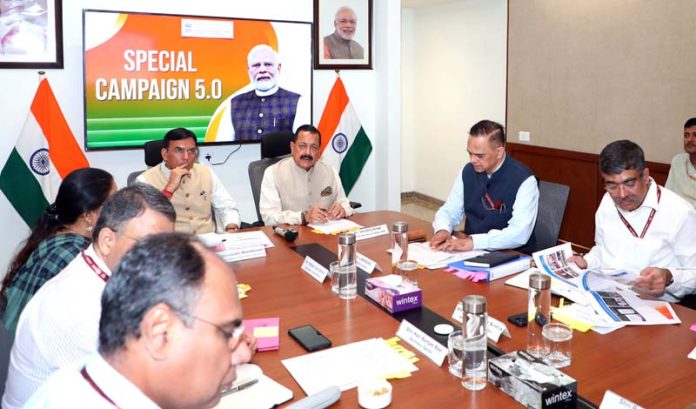
In a call to action for all ministries and departments, Dr. Jitendra Singh, Union Minister of State for Science & Technology, urged a transformation of the government’s ongoing cleanliness initiative into a mass movement. This campaign will emphasize public participation, innovation, and engagement with the private sector.
The Minister’s statement came during a high-level review meeting on the implementation of Special Campaign 5.0, where he stressed the need for a substantial shift away from mere symbolic efforts. He insisted on the integration of cleanliness, space optimization, and record management into the regular frameworks of governance.
“We should integrate technology, community engagement, and private sector collaboration to ensure that the campaign sustains itself throughout the year,” Dr. Singh stated, highlighting the essential role of continued effort and innovation.
The Minister suggested leveraging corporate partnerships and MSME collaborations through organizations like NASSCOM to introduce innovative waste management solutions, particularly focusing on urban clusters, hotels, and government establishments. He noted that adopting digital technologies and smart recycling models, including automated waste segregation and electronic scrap management, could vastly improve operational efficiency while generating new livelihood opportunities.
Dr. Singh pointed out the importance of sharing best practices among various ministries. He proposed documenting and disseminating successful cleanliness models nationwide through a central repository. He urged the identification of innovative initiatives such as electronic file disposal, smart waste reuse, and repurposing cleared government land to enhance governance standards.
The Minister emphasized that engaging the youth and women could infuse the campaign with energy and creativity. “When young people and women join the movement, it becomes more vibrant and impactful,” he remarked. He called for amplifying Swachhata messages through schools, colleges, and My Bharat volunteers, aiming to instill a culture of collective responsibility.
Referring to the success of prior campaigns, Dr. Jitendra Singh noted how the Special Campaign had transitioned from a short-term cleanliness drive into a transformative governance model promoting efficiency, transparency, and a citizen-centric approach to administration. He reassured participants of the government’s commitment to maintaining this momentum under the leadership of Prime Minister Narendra Modi. Additionally, he announced plans to share emerging best practices from the campaign with States, PSUs, and autonomous bodies.
Earlier, Dr. Mansukh Mandaviya, Union Minister of Health and Family Welfare, echoed Dr. Singh’s sentiments, emphasizing the critical roles of behavioural change and youth participation in achieving the vision of a “Swachh Bharat”. He recommended appointing student and youth ambassadors from colleges and universities to enhance community motivation for cleanliness and hygiene.
The gathering included notable officials such as V. Srinivas, Secretary, DARPG; Sarita Chuhan, Joint Secretary, DARPG; and other key personnel from the Department of Administrative Reforms and Public Grievances (DARPG), Department of Personnel and Training (DoPT), and various allied departments and partner organizations.

