


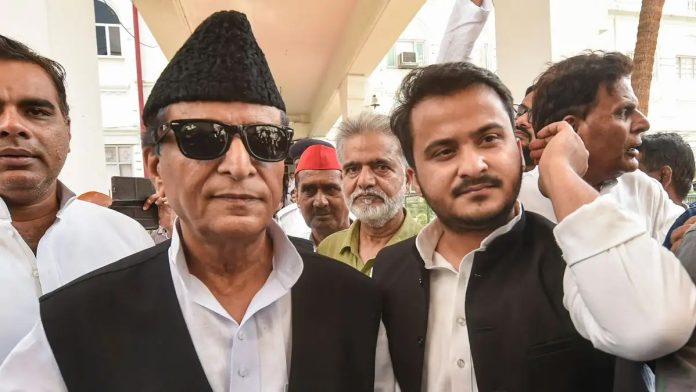
Senior Samajwadi Party leader Mohammad Azam Khan and his son Abdullah Azam received prison sentences of up to seven years on Monday from a special MP/MLA court in Rampur. This ruling stems from a 2019 case in which the pair obtained two Permanent Account Number (PAN) cards using different dates of birth.
Special Magistrate Shobhit Bansal pronounced the father-son duo guilty after a thorough examination of documentary evidence and witness testimonies presented in court. According to prosecution officer Rakesh Kumar Maurya, the verdict followed a detailed assessment of relevant facts.
Maurya mentioned, “The prosecution will review the judgment and may explore the option of appeal if we find the sentencing inadequate.” This statement highlights the potential for further legal action in this high-profile case.
Upon conviction, Maurya confirmed, “Yes, absolutely,” when questioned about whether Azam Khan and Abdullah would be taken into custody. Their imprisonment marks a significant chapter in this ongoing legal saga.
The police registered the case in 2019 at Rampur’s Civil Lines station, initiated by a complaint from BJP leader Akash Saxena. The charges include Section 420 (cheating), Section 467 (forgery of valuable security), Section 468 (forgery for cheating), Section 471 (using a forged document), and Section 120-B (criminal conspiracy) of the Indian Penal Code (IPC).
The prosecution revealed that Abdullah managed to obtain a PAN card from the Income Tax Department, stating his date of birth as January 1, 1993. This date was consistent with his academic records and bank details, thereby establishing his intent to use the forged identity for official purposes.
The court determined that Abdullah acquired the fraudulent PAN card “in conspiracy with his father,” confirming that both played active roles in this illicit scheme. This conviction pinpoints the seriousness of identity fraud and its implications in public life.
This sentencing delivers a crucial message about accountability among public figures. As the legal proceedings unfold, all eyes remain on Rampur, where the implications of this case extend beyond personal ramifications to broader political consequences. The Samajwadi Party and its supporters now face significant challenges as they navigate the fallout from this verdict.
For many, this case reinforces the idea that no one is above the law, even individuals with considerable political influence. As discussions ensue around the ethics of public service, Azam Khan and Abdullah Azam’s situation provides a critical view into the world of Indian politics and the ongoing struggle against corruption.

